 Lieven Baert began his career in 1981 in Ghent, Belgium, and
has studied with Elizabeth Aldrich, Ingrid Brainard, Angene Feves, Andrea Francalanci, Francine
Lancelot, Prof. Taubert, Barbara Sparti, Jane Gingell, Francine Lancelot, Béatrice Massin and
Marie Geneviève Massé. In 1985 he founded Chierlycke Danseryen, a company specializing
in 16th century court dances. In 1987 he specialized in 15th century French/Burgundian court
dance and gained success with his program "The art of dancing in the 15th century" which toured
early music festivals in Utrecht, Glasgow, Krakau, Darmstadt and Berlin. The same year he
collaborated with the Belgian ballet world in creating a new historical dance company Danza
Antiqua. His Institute of Historical Dance was founded in 1992 to create a field for
research and performance practice of historical dance. In 2000 he organized the first
International Colloquium on Early Dance in collaboration with the University of Ghent and under
the auspices of the Unesco. He was guest professor at the University of Stockholm and teaches
every year at the Alicia Alonso Institute University Carlos III in Madrid. He choreographed for
the Classical National Theatre in Madrid and worked for the Spanish Cultural Government. Since
2000 he has been stage director for the Brussels Operetta Theatre.
Lieven Baert began his career in 1981 in Ghent, Belgium, and
has studied with Elizabeth Aldrich, Ingrid Brainard, Angene Feves, Andrea Francalanci, Francine
Lancelot, Prof. Taubert, Barbara Sparti, Jane Gingell, Francine Lancelot, Béatrice Massin and
Marie Geneviève Massé. In 1985 he founded Chierlycke Danseryen, a company specializing
in 16th century court dances. In 1987 he specialized in 15th century French/Burgundian court
dance and gained success with his program "The art of dancing in the 15th century" which toured
early music festivals in Utrecht, Glasgow, Krakau, Darmstadt and Berlin. The same year he
collaborated with the Belgian ballet world in creating a new historical dance company Danza
Antiqua. His Institute of Historical Dance was founded in 1992 to create a field for
research and performance practice of historical dance. In 2000 he organized the first
International Colloquium on Early Dance in collaboration with the University of Ghent and under
the auspices of the Unesco. He was guest professor at the University of Stockholm and teaches
every year at the Alicia Alonso Institute University Carlos III in Madrid. He choreographed for
the Classical National Theatre in Madrid and worked for the Spanish Cultural Government. Since
2000 he has been stage director for the Brussels Operetta Theatre.
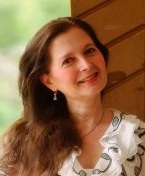 Catherine Turocy is Artistic Director and co-founder of The
New York Baroque Dance Company and is internationally recognized for her contribution to the
current revival of 18th century works. She has been commissioned to choreograph over 20 opera
productions in France and the United States, including Rameau's Les Boréades and Les Fêtes
d'Hébé, Leclair's Scylla et Glaucus, Charpentier's Les Arts Florissants. In 1995 Ms. Turocy
was knighted by the French government for her artistic contributions to the dance field. As
a stage director, she has mounted Gluck's Orfeo and Purcell's Dido and Aeneas in New York City,
Handel's Ariodante for the Spoleto Festival USA in Charleston, South Carolina, Landi's Il
Sant'Alessio in Los Angeles, and Handel's Apollo e Dafne for the New World Symphony in Miami
Beach. She has worked with such notable conductors as Christopher Hogwood, Nicholas McGegan,
James Richman, and John Eliot Gardiner. Her ballets have been filmed for French and American
television and featured at international venues including the Châtelet in Paris, the
Aix-en-Provence Festival, the Opéra de Lyon and the Mostly Mozart Festival at Lincoln Center
and the Mozart Festival at the Kennedy Center.
Catherine Turocy is Artistic Director and co-founder of The
New York Baroque Dance Company and is internationally recognized for her contribution to the
current revival of 18th century works. She has been commissioned to choreograph over 20 opera
productions in France and the United States, including Rameau's Les Boréades and Les Fêtes
d'Hébé, Leclair's Scylla et Glaucus, Charpentier's Les Arts Florissants. In 1995 Ms. Turocy
was knighted by the French government for her artistic contributions to the dance field. As
a stage director, she has mounted Gluck's Orfeo and Purcell's Dido and Aeneas in New York City,
Handel's Ariodante for the Spoleto Festival USA in Charleston, South Carolina, Landi's Il
Sant'Alessio in Los Angeles, and Handel's Apollo e Dafne for the New World Symphony in Miami
Beach. She has worked with such notable conductors as Christopher Hogwood, Nicholas McGegan,
James Richman, and John Eliot Gardiner. Her ballets have been filmed for French and American
television and featured at international venues including the Châtelet in Paris, the
Aix-en-Provence Festival, the Opéra de Lyon and the Mostly Mozart Festival at Lincoln Center
and the Mozart Festival at the Kennedy Center.
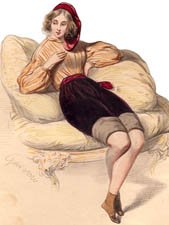 Elizabeth Aldrich is internationally known for her work in period dance.
She has provided choreography for nine feature films, including The Age of Innocence; The Remains of the Day;
and Washington Square, with film directors Martin Scorsese, James Ivory, Agnieszka Holland, and
Rob Minkoff. She has taught and choreographed for organizations throughout North America, Europe, Asia,
and South America. Aldrich is the author of the book From the Ballroom to Hell: Grace and Folly in
Nineteenth-Century Dance (1991); the Introduction, International Encyclopedia of Dance (1998);
and has contributed chapters to publications, including "Social Dancing in Schubert's World" in Schubert's
World: Vienna in the Reign of Francis I (1997); "Plunge Not into the Mire of Worldly Folly: Nineteenth-Century
and Early Twentieth-Century Religious Objections to Social Dance in the United States" in Dance, Human
Rights, and Social Justice: Dignity in Motion (2008); and "The Civilizing of America's Ballrooms: The
Revolutionary War to 1890," in Ballroom, Boogie, Shimmy Sham, Shake (2008). Aldrich served as
managing editor for the International Encyclopedia of Dance and was responsible for the Library of
Congress's online presentation, An American Ballroom Companion, c.1490-1926. In 2006 she was
named the first curator of dance at the Library of Congress.
Elizabeth Aldrich is internationally known for her work in period dance.
She has provided choreography for nine feature films, including The Age of Innocence; The Remains of the Day;
and Washington Square, with film directors Martin Scorsese, James Ivory, Agnieszka Holland, and
Rob Minkoff. She has taught and choreographed for organizations throughout North America, Europe, Asia,
and South America. Aldrich is the author of the book From the Ballroom to Hell: Grace and Folly in
Nineteenth-Century Dance (1991); the Introduction, International Encyclopedia of Dance (1998);
and has contributed chapters to publications, including "Social Dancing in Schubert's World" in Schubert's
World: Vienna in the Reign of Francis I (1997); "Plunge Not into the Mire of Worldly Folly: Nineteenth-Century
and Early Twentieth-Century Religious Objections to Social Dance in the United States" in Dance, Human
Rights, and Social Justice: Dignity in Motion (2008); and "The Civilizing of America's Ballrooms: The
Revolutionary War to 1890," in Ballroom, Boogie, Shimmy Sham, Shake (2008). Aldrich served as
managing editor for the International Encyclopedia of Dance and was responsible for the Library of
Congress's online presentation, An American Ballroom Companion, c.1490-1926. In 2006 she was
named the first curator of dance at the Library of Congress.
 Richard Powers is an instructor and dance historian at Stanford
University's Dance Division. His research is drawn from a personal collection of over one thousand
historic dance manuals, one of
the largest personal collections in the world, supplemented with a twelve thousand-title collection of period
dance music. He founded the Clifton Court Dancers in 1976 (Renaissance and Baroque
dance) and the Flying Cloud Academy of Vintage Dance in 1981. He choreographed and directed
the 19th century ballroom dances for the Warner Bros./ABC film North and South (1985),
choreographed the Victorian ballroom dances for the public television film Mrs. Perkins' Ball
(1986), trained the dancers for the Tri-Star film Glory (1989) and choreographed ragtime
dance for Faye Dunaway and Richard Widmark in Cold Sassy Tree (1989). Numerous stage
choreographies include Bill Irwin's Scapin (1997), dance historian for the Tony Award-winning
Broadway musical Titanic (1997), choreographies for Dickens' A Christmas Carol,
Mozart's Don Giovanni, Shakespeare's King Henry VIII, Massenet's Cendrillon,
Monteverdi's Madrigals of Love and War and Orfeo, Berlioz's Beatrice and
Benedict and choreographies for the Pacific Northwest Ballet. He has performed at the
Smithsonian Institution and taught at the Accademia Nazionale di Danza in Rome and at Lincoln Center, N.Y.
Richard was selected by the
Centennial Issue of Stanford Magazine as one of Stanford University's most notable graduates (1992).
Richard Powers is an instructor and dance historian at Stanford
University's Dance Division. His research is drawn from a personal collection of over one thousand
historic dance manuals, one of
the largest personal collections in the world, supplemented with a twelve thousand-title collection of period
dance music. He founded the Clifton Court Dancers in 1976 (Renaissance and Baroque
dance) and the Flying Cloud Academy of Vintage Dance in 1981. He choreographed and directed
the 19th century ballroom dances for the Warner Bros./ABC film North and South (1985),
choreographed the Victorian ballroom dances for the public television film Mrs. Perkins' Ball
(1986), trained the dancers for the Tri-Star film Glory (1989) and choreographed ragtime
dance for Faye Dunaway and Richard Widmark in Cold Sassy Tree (1989). Numerous stage
choreographies include Bill Irwin's Scapin (1997), dance historian for the Tony Award-winning
Broadway musical Titanic (1997), choreographies for Dickens' A Christmas Carol,
Mozart's Don Giovanni, Shakespeare's King Henry VIII, Massenet's Cendrillon,
Monteverdi's Madrigals of Love and War and Orfeo, Berlioz's Beatrice and
Benedict and choreographies for the Pacific Northwest Ballet. He has performed at the
Smithsonian Institution and taught at the Accademia Nazionale di Danza in Rome and at Lincoln Center, N.Y.
Richard was selected by the
Centennial Issue of Stanford Magazine as one of Stanford University's most notable graduates (1992).
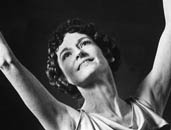 Sandra Noll Hammond is recognized internationally for her ability to "bring
the past to life" through her research, publications, performances, and
classes in which she traces the historical development of ballet technique.
As guest artist, she has presented her unique investigations of early
19th-century ballet technique and repertory in many European ballet centers
as well as in Canada, Mexico, and throughout the U.S. She was instrumental
in founding the dance major program at the University of Arizona in Tucson;
she served as Director of Dance at the University of Hawaii; and for both
institutions she taught ballet technique, dance history, and historical
dance forms. In 2009, Sandra received the Life-Time Achievement Award from
the Council of Organized Researchers for Pedagogical Study (CORPS de Ballet
International). She has served on the board of directors and on the
editorial board of the Society of Dance History Scholars, and currently she
is on the advisory board for Dance Chronicle. She has authored two textbooks, Ballet Basics and
Ballet: Beyond the Basics; numerous articles in leading dance history publications such as Dance Chronicle,
Dance Research (London), Dance Research Journal; International Encyclopedia of Dance, and most recently,
"The Rise of Ballet Technique and Training: The Professionalization of an International Dance Form" in The Cambridge Companion to Ballet.
Sandra Noll Hammond is recognized internationally for her ability to "bring
the past to life" through her research, publications, performances, and
classes in which she traces the historical development of ballet technique.
As guest artist, she has presented her unique investigations of early
19th-century ballet technique and repertory in many European ballet centers
as well as in Canada, Mexico, and throughout the U.S. She was instrumental
in founding the dance major program at the University of Arizona in Tucson;
she served as Director of Dance at the University of Hawaii; and for both
institutions she taught ballet technique, dance history, and historical
dance forms. In 2009, Sandra received the Life-Time Achievement Award from
the Council of Organized Researchers for Pedagogical Study (CORPS de Ballet
International). She has served on the board of directors and on the
editorial board of the Society of Dance History Scholars, and currently she
is on the advisory board for Dance Chronicle. She has authored two textbooks, Ballet Basics and
Ballet: Beyond the Basics; numerous articles in leading dance history publications such as Dance Chronicle,
Dance Research (London), Dance Research Journal; International Encyclopedia of Dance, and most recently,
"The Rise of Ballet Technique and Training: The Professionalization of an International Dance Form" in The Cambridge Companion to Ballet.
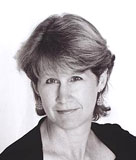
Joan Walton has been teaching at Vintage and Historical dance workshops
nationally and internationally since 1991. Her work encompasses choreographing for operas at the
College-Conservatory of Music in Cincinnati, with six of them winning 1st place at the National Opera
Awards. She also creates choreography for Vintage dance performing companies, including Watch Your
Step in Denver, and Danse Libre in the Bay Area. Musical theatre productions, particularly those with
a Vintage or Tap dance focus, are another specialty. As Assistant Director and performer with Richard
Powers' Flying Cloud Vintage Dance Troupe for ten years, she danced in the 1985 TV mini-series North
and South. A guest artist with the Cincinnati Pops Orchestra, she performed Morton Gould's challenging
Tap Dance Concerto. Joan received her Master's degree in Dance Education at Stanford University and
now teaches in the San Francisco Bay Area.